
Iran: Unrest continues as economic protests escalate throughout the country

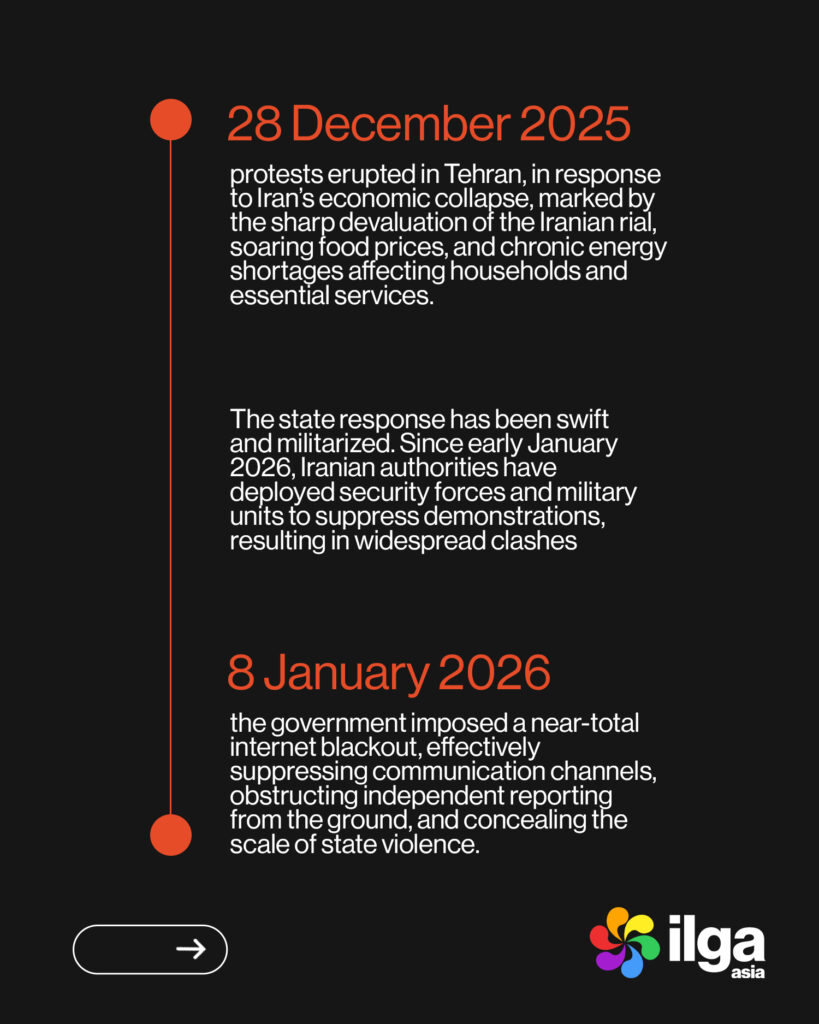
On 28 December 2025, protests erupted in Tehran, in response to Iran’s economic collapse, marked by the sharp devaluation of the Iranian rial, soaring food prices, and chronic energy shortages affecting households and essential services. What began as economically driven demonstrations rapidly transformed into a nationwide movement, spreading across all 31 provinces and cutting across class, ethnic, and generational lines. Protesters articulated grievances not only against hyperinflation and economic precarity, but also against entrenched corruption, the erosion of public infrastructure and social protection systems, and disproportionate military spending amid widespread civilian hardship. These demands have increasingly converged with broader questions of political accountability and the legitimacy of the ruling regime.

The state response has been swift and militarized. Since early January 2026, Iranian authorities have deployed security forces and military units to suppress demonstrations, resulting in widespread clashes. On 8 January 2026, the government imposed a near-total internet blackout, effectively suppressing communication channels, obstructing independent reporting from the ground, and concealing the scale of state violence. While there are reports of internet connection returning to Iran, the connection is still intermittent and with internet observers reporting significant throttling in internet connectivity. Casualty reports remain difficult to verify due to the blackout and discrepancies between state reporting and human rights documentation; however, credible estimates indicate that thousands have been killed, with tens of thousands reportedly detained. Despite the escalating unrest, the core demands of the movement — addressing  hyperinflation, systemic corruption, the erosion of basic social services and infrastructure, and disproportionate  military spending — remain unaddressed, alongside growing challenges to the political legitimacy of the regime.

ILGA Asia is concerned by the protest crackdowns undertaken by the Iranian regime with excessive use of force against the protestors, the loss of human lives, and the internet blackout employed for the repression of freedom of expression and information in Iran. The UN has called this the “deadliest crackdown by the Government of Iran against its people” since 1979 and underscored the urgency of collecting evidence of alleged human rights violations, including to determine whether international crimes such as crimes against humanity may have occurred.

In situations of unrest, those already living at the margins are often the most severely impacted. While Iran is the only country in the Middle East that formally recognises transgender identities and permits gender-affirming surgeries, LGBTIQ people remain subject to extensive state surveillance, criminalisation, and restrictions on political and social visibility. In its report published on 14 March 2025, the UN Independent International Fact Finding Mission on Iran found that Iranian authorities have committed gross human rights violations as well as evidence of LGBTIQ people being specifically and systematically targeted for persecution in the aftermath of the 2022-2023 “Woman, Life, Freedom” protests. While the long and short term impact of the current events are still unfolding, the LGBTIQ people on the ground continue to be implicated because of their sexual orientation, gender identity and expression, and sex characteristics.

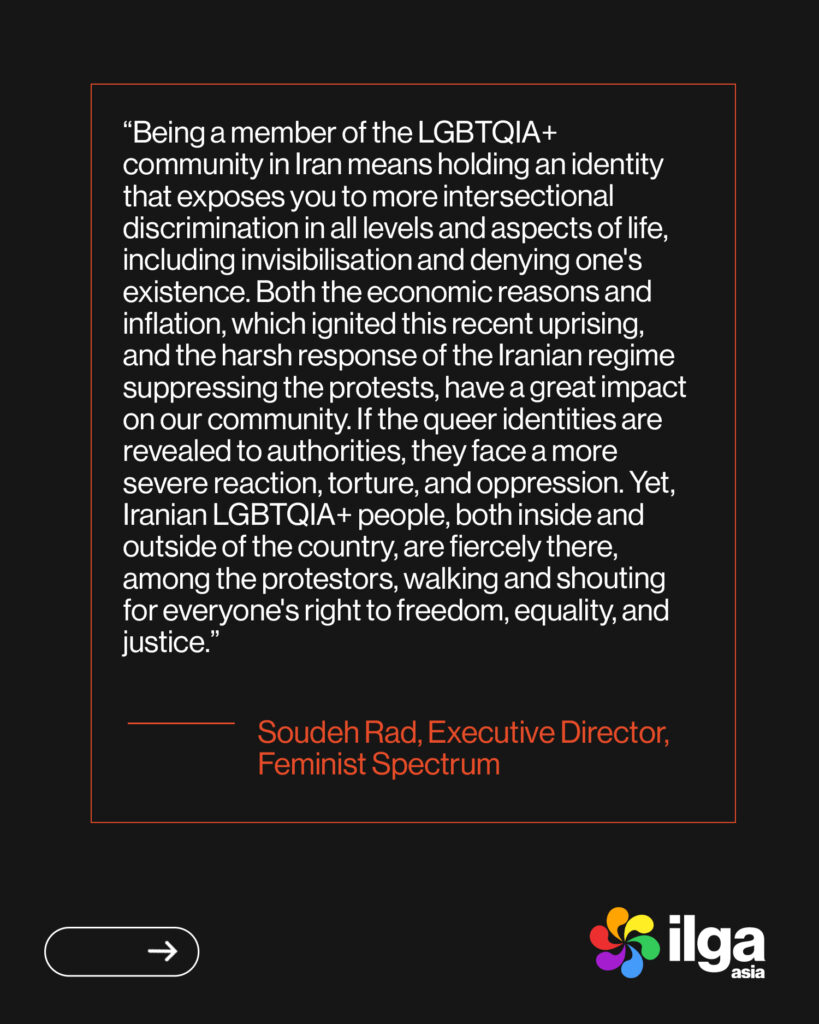
Being a member of the LGBTQIA+ community in Iran means holding an identity that exposes you to more intersectional discrimination in all levels and aspects of life, including invisibilisation and denying one’s existence. Both the economic reasons and inflation, which ignited this recent uprising, and the harsh response of the Iranian regime suppressing the protests, have a great impact on our community. If the queer identities are revealed to authorities, they face a more severe reaction, torture, and oppression. Yet, Iranian LGBTQIA+ people, both inside and outside of the country, are fiercely there, among the protestors, walking and shouting for everyone’s right to freedom, equality, and justice.” —  Soudeh Rad, Executive Director,  Feminist Spectrum.

Reflecting on the broader implications of the crackdown, ILGA Asia’s Executive Director underscored that the persecution of LGBTIQ people in Iran is neither incidental nor isolated, but deeply embedded within the state’s broader architecture of repression. Periods of political unrest consistently reveal how laws, moral policing, and gender norms are weaponised to fracture dissent, justify excessive force, and discipline bodies deemed deviant or disposable.

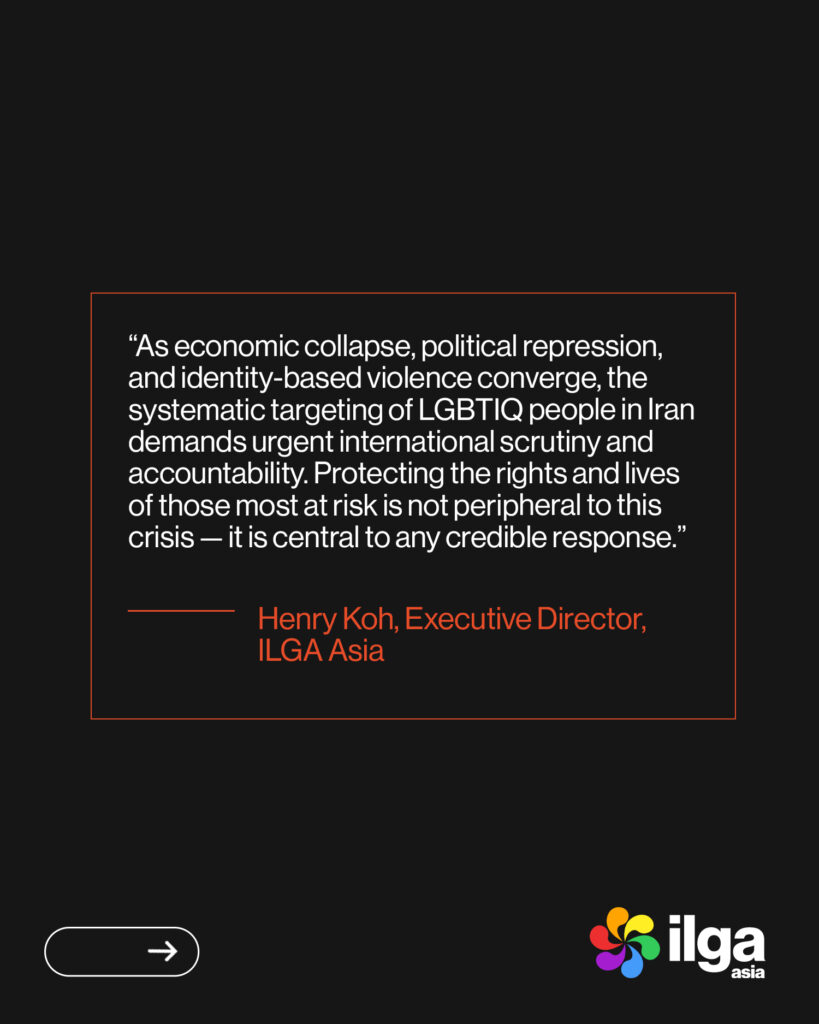
“As economic collapse, political repression, and identity-based violence converge, the systematic targeting of LGBTIQ people in Iran demands urgent international scrutiny and accountability. Protecting the rights and lives of those most at risk is not peripheral to this crisis — it is central to any credible response.” — Henry Koh, Executive Director, ILGA Asia

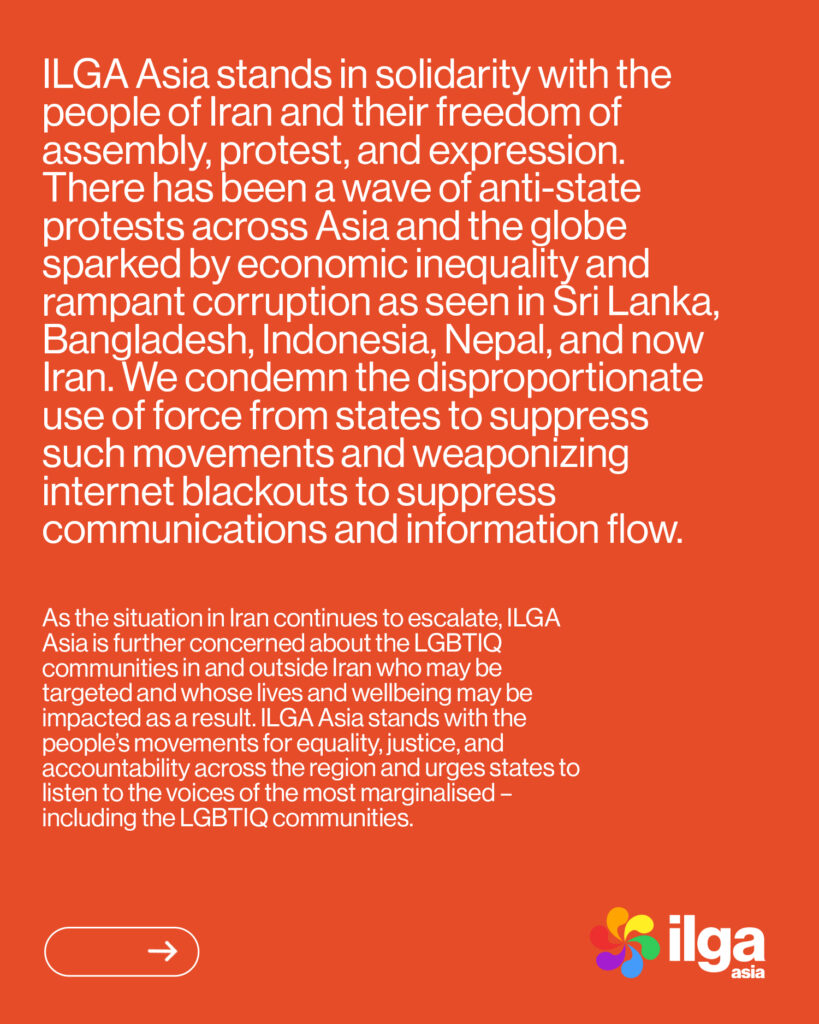
ILGA Asia stands in solidarity with the people of Iran and their freedom of assembly, protest, and expression. There has been a wave of anti-state protests across Asia and the globe sparked by economic inequality and rampant corruption as seen in Sri Lanka, Bangladesh, Indonesia, Nepal, and now Iran. We condemn the disproportionate use of force from states to suppress such movements and weaponizing internet blackouts to suppress communications and information flow. 

As the situation in Iran continues to escalate, ILGA Asia is further concerned about the LGBTIQ communities in and outside Iran who may be targeted and whose lives and wellbeing may be impacted as a result. ILGA Asia stands with the people’s movements for equality, justice, and accountability across the region and urges states to listen to the voices of the most marginalised – including the LGBTIQ communities.

Testimonials from displaced LGBTIQ Afghanistani in Iran

The following testimony illustrates the compounded vulnerabilities faced by displaced LGBTIQ people in Iran, particularly those deported or forcibly returned to contexts of extreme persecution.

“My life in Iran was worse than in Afghanistan. Every day was full of humiliation, insults, and abuse. They called me ‘Izak Afghani’ and looked at me with hatred. I had no one; only God.

To survive, I had to work in a women’s beauty salon. But even there, I was rejected. They said, ‘You’re neither a man nor a woman. This is not a place for you.’ The young women didn’t want me to work for them. I had no money—not for food, nor for shelter.

I wanted to find a job in a hotel, but they refused. They said, ‘You’re a “Night girl,” and you’ll bring shame to this place.’ At night, I was afraid of thieves, of being raped. Sometimes, I would go to a hotel just to sleep. But even there, I wasn’t safe. The hotel manager asked me to give my body in exchange for safety. He said, ‘You look like a woman, we like people like you.’ I just wanted to stay alive. They would give me a place for a week and then throw me out.

If I got sick and had no money, even the doctor would ask for sex in exchange for treatment. I had to accept. Every night felt like death. My life was worse than that of a dog. I had no clothes, no food, no dignity—nothing. I buried all my emotions and desires just to survive. I was afraid to wear makeup; I was afraid I would get caught. Iran is an Islamic country, but it showed me no mercy.

Amidst all the injustices, I sometimes thought about suicide, but I endured. After a while, my visa expired. The Iranian government deported me, beating me up—without money, crying, and full of regret.

When I entered Afghanistan, the Taliban tried to arrest me. They interrogated me for twenty minutes. They asked, ‘Why do you speak like this? Why do your hands and movements appear feminine?’ They hit me in the face. They beat me with their feet. They said, ‘You’re Izak.’ My mouth bled. They burned my clothes and belongings. They wanted to imprison me. A few elders came and saved me. They tore up my passport—every single page.”
Share the Post:

Latest Posts

Furtengi Sherpa

(he/him)
MONITORING, EVALUATION, LEARNING  (MEL) ASSOCIATE

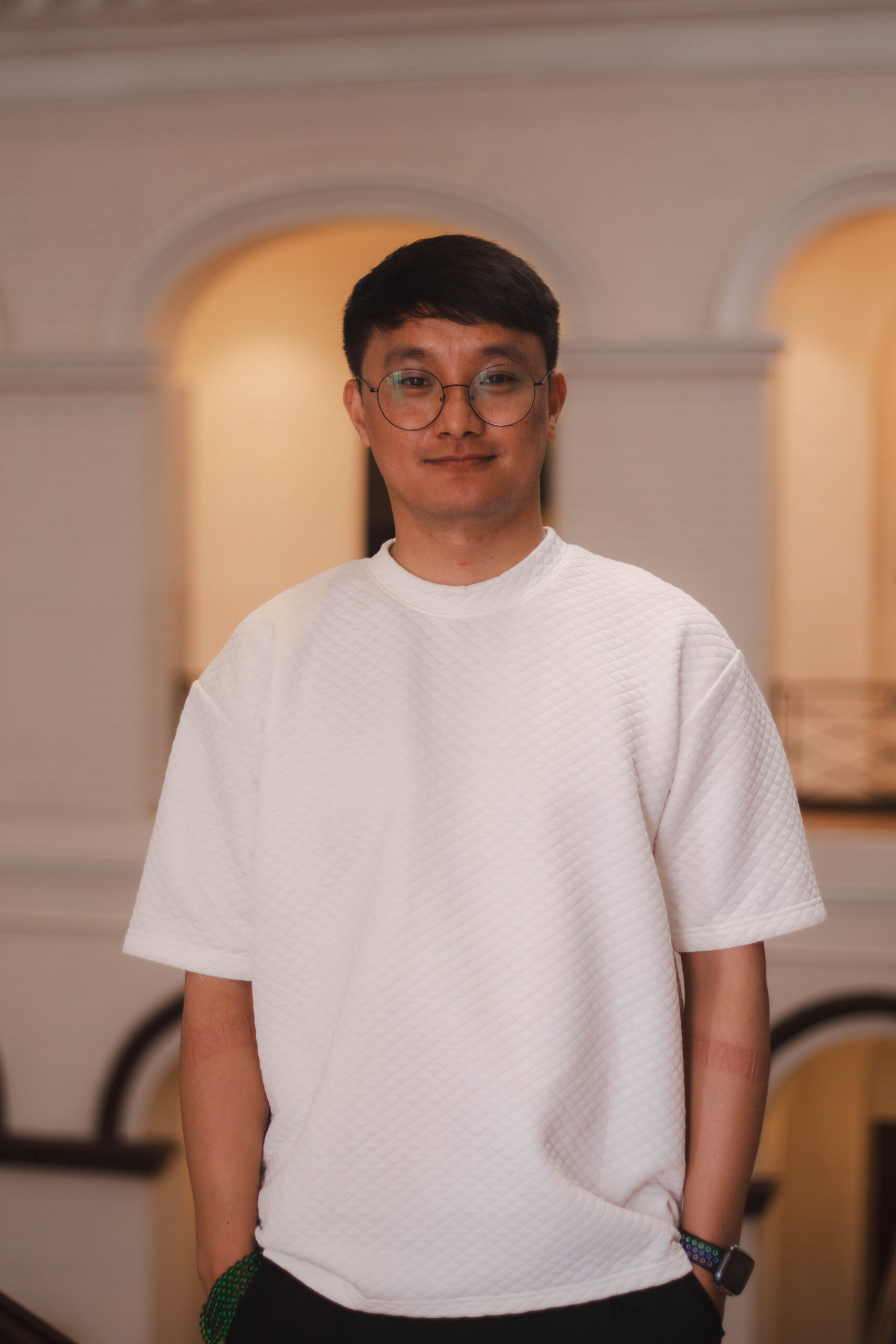
Master’s degree in Public Health, earned on a full scholarship, and brings years of experience in monitoring, evaluation, learning, and advocacy across community-based initiatives. His work is guided by a deep belief in social justice and equity. Over the years, he has collaborated with LGBTIQA+ communities, people living with HIV and women living with HIV, working to expand their access to health services, challenge stigma, and strengthen community resilience. Beyond his technical expertise, Furtengi finds meaning in supporting grassroots organizations, building capacity, and amplifying community-led solutions. He is driven by the vision of a society where everyone can live with dignity, equality, and respect, regardless of their identity or circumstances.

Aabyaz Mustafa

(he/they)
Youth REPRESENTATIVE

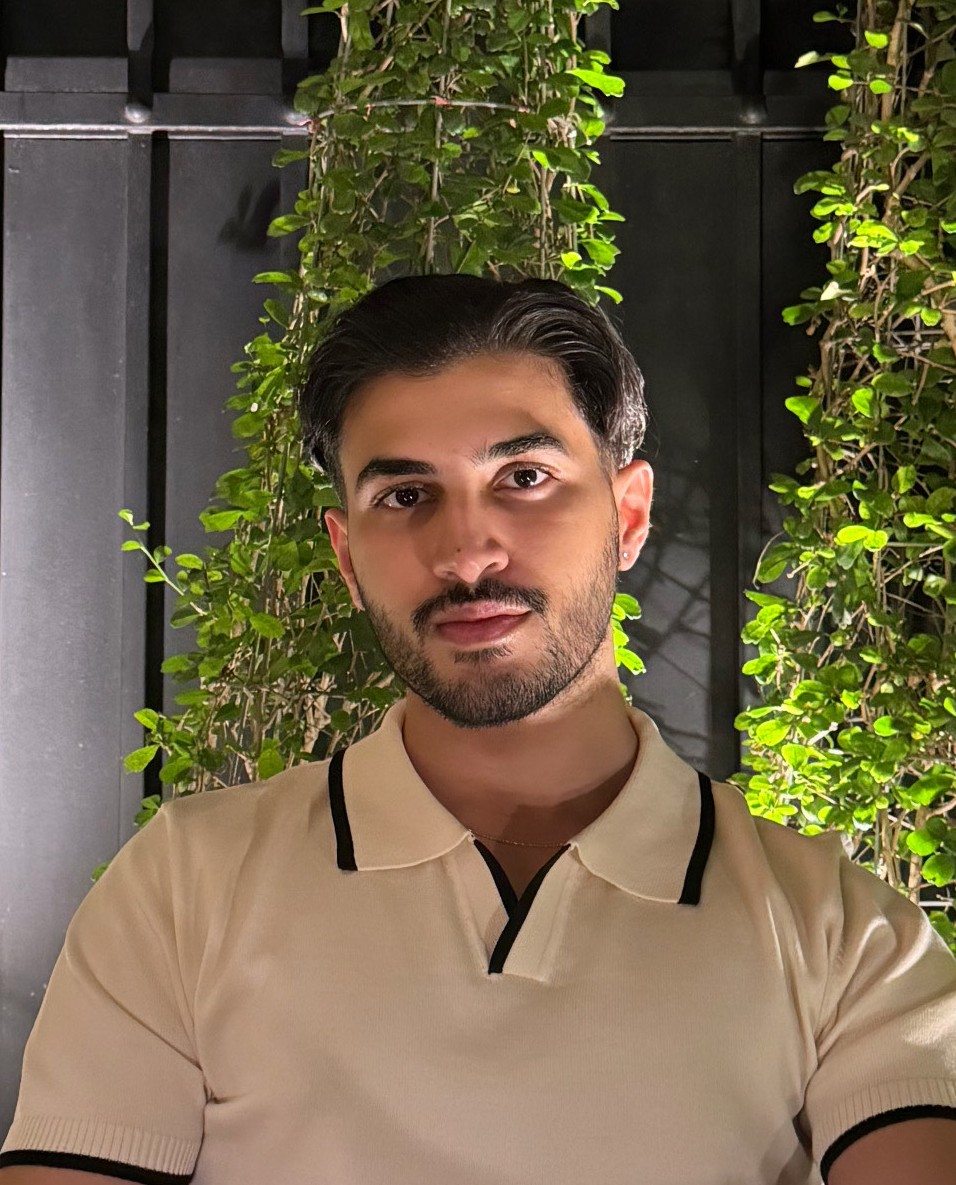
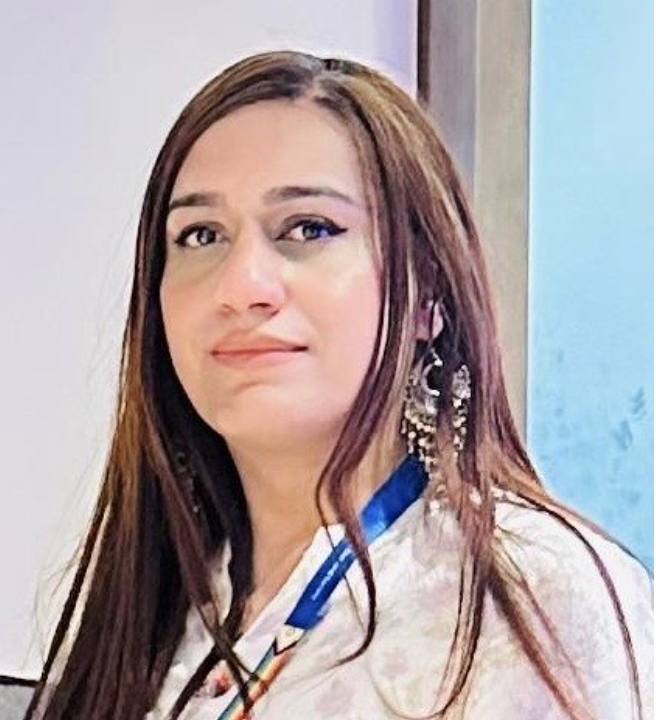
Aabyaz Mustafa (he/they) is a finance professional, human rights defender, and fashion model from Pakistan. He is the CEO and Co-Founder of Gender Rights Watch (GRW), a nonprofit providing mental health and suicide prevention support to marginalized communities in the Global South. With over a decade in minority rights advocacy, Aabyaz has worked with Rainbow Railroad during the Afghan-Taliban crisis and was instrumental in advancing Pakistan’s Transgender Persons (Protection of Rights) Act, 2018.

Driven by a belief in collective action, Aabyaz mobilizes communities and allies for a more inclusive world. In their free time, they enjoy traveling, nature, and fitness as part of a holistic approach to well-being.

Mahnoor Aka Moon​

(she/her/hers)
SOUTH ASIA REPRESENTATIVE

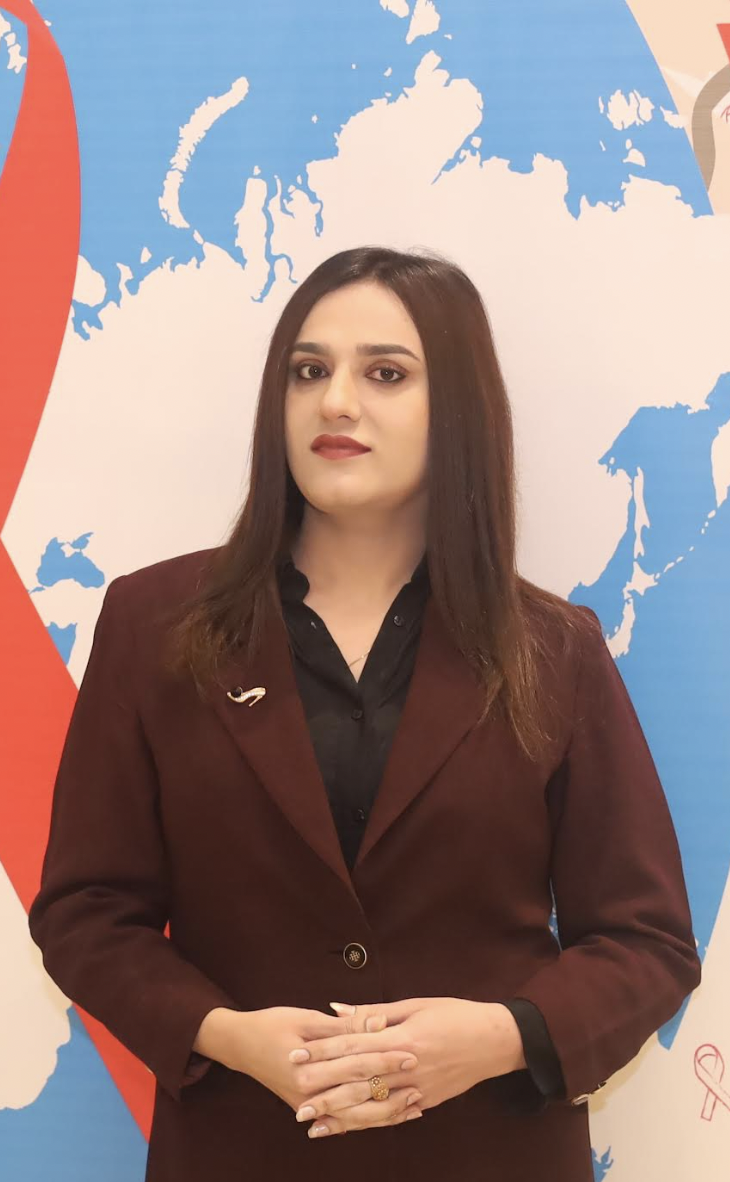
Mahnoor Ch, also known as Moon, is a prominent advocate for gender rights, HIV awareness, and social justice in Pakistan. As a development practitioner, social scientist, and gender rights expert, she brings extensive experience and a multidisciplinary approach to her work. In her role as Program Director at the Khawaja Sira Society, she has led impactful initiatives, including the Multi-Country South Asia Global Fund Project. Her contributions have earned her several accolades, such as the Community Hero Award and formal recognition from both the Governor of Punjab and the President of the United States.

Beyond her leadership in community-based projects, Mahnoor has served as a trainer and technical expert, providing guidance on national policy development for the National AIDS Control Program and conducting training sessions for law enforcement in Lahore and Rawalpindi. She also plays a key role on the steering committee of the Global Fund Advocates Network for the Asia-Pacific region, helping shape global strategies for health and rights advocacy. Currently, Mahnoor is a member of the Prime Minister’s Counsel in Pakistan, advising on high-level policy decisions. She also works as a community-based implementing partner with UNDP, ensuring HIV prevention and treatment services are accessible to marginalized populations. Her unwavering dedication to equality and justice continues to inspire meaningful change across Pakistan and beyond.

Shane Bhatla

(he/they)
Disability Representative

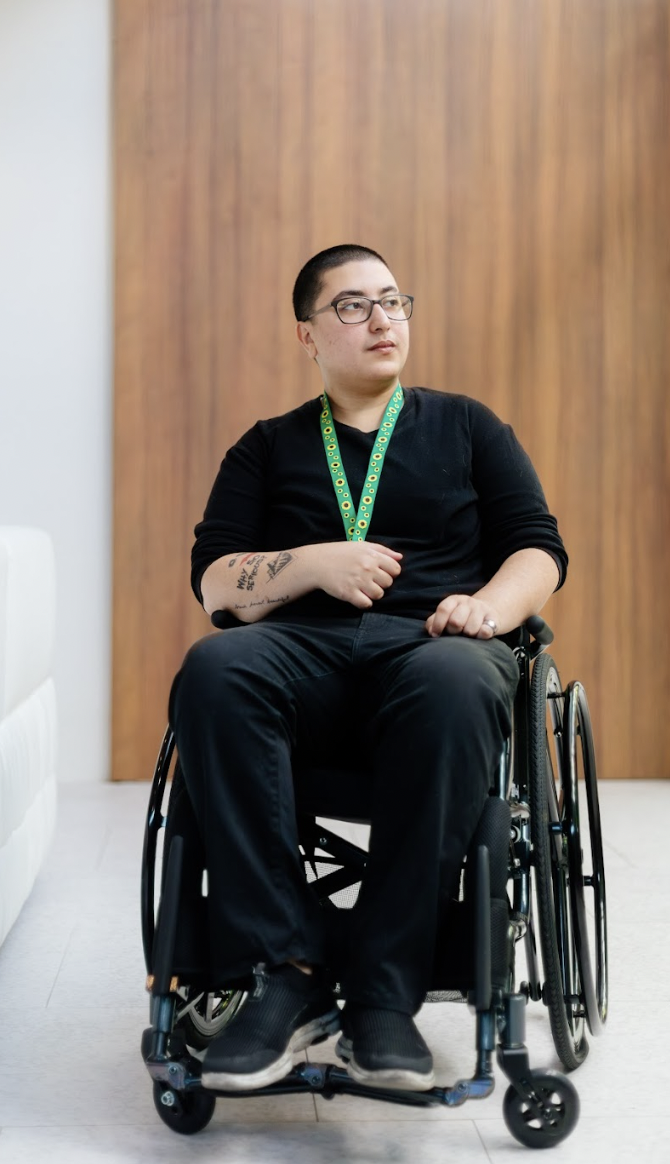
Shane (he/they) is a non-binary disabled activist and Gender Equality, Diversity, and Social Inclusion (GEDSI) consultant. They also serve on the advisory panel of Access For Everyone and are on the Global Advisory Board of a MHPSS and QMU project. Shane’s advocacy focuses on trans and disability issues, working to destigmatize conversations about mental well-being in these communities. Their journey reflects resilience and a commitment to breaking down societal barriers, with eight years of experience in the non-profit sector.

Shane’s notable projects include making regional LGBTIQ+ conferences more accessible, hosting a roundtable on the intersectionality of LGBTIQ+ and disability, creating a media publication featuring photos of LGBTIQ+ disabled individuals and a project to enhance the competency of suicide hotline crisis workers on LGBTIQ+ and disability issues.

With over a decade of work experience, Shane has been featured in the media, on blogs, podcasts and video interviews. Additionally, he has authored an e-book named A11y: A guide to accessibility for employers. Their expertise stems not just from their work experience, but also lived experience. In 2024, they were involved in developing the Kathmandu Charter for the rights of people with lived experience of mental health conditions, a never done before initiative.

Learn more on: shanebhatla.org

Tashi Tsheten​

(he/they)
SOUTH ASIA and ILGA World REPRESENTATIVE​

Tashi is an LGBTQIA+ advocate from Bhutan and a Co-Founder of Queer Voices of Bhutan (QVoB), a community-based platform supporting the rights and inclusion of the gender and sexually diverse community in Bhutan. With a focus on addressing social stigma and advocating for legal and economic opportunities, Tashi and their team continue to contribute to advancing LGBTQIA+ rights nationally and regionally. Currently serving as a Program Advisor at QVoB, Tashi is also engaged in regional efforts through Youth Voices Count (YVC) and ILGA ASIA. Passionate about social justice, community building, and policy advocacy, Tashi remains committed to fostering greater understanding and acceptance for the LGBTQIA+ community.

Aisha Mughal

(she/her)
TRANS REPRESENTATIVE and ILGA Asia Co-Chair

Aisha Mughal is a transgender rights expert working with the Ministry of Human Rights in Pakistan and as a UNDP Consultant. Since 2015, she has been actively advocating for transgender rights. In 2020, she made history as the first transgender person to represent any country during an official UN treaty review, participating in Pakistan’s national delegation to the UN CEDAW committee in Geneva. Aisha has contributed to peer-reviewed research on transgender issues and played a key role in the drafting and approval of the Transgender Persons (Protection of Rights) Act, 2018. She has also served with the National Commission for Human Rights (NCHR) in Pakistan.

Joyce Teng

(she/her)
EAST ASIA REPRESENTATIVE

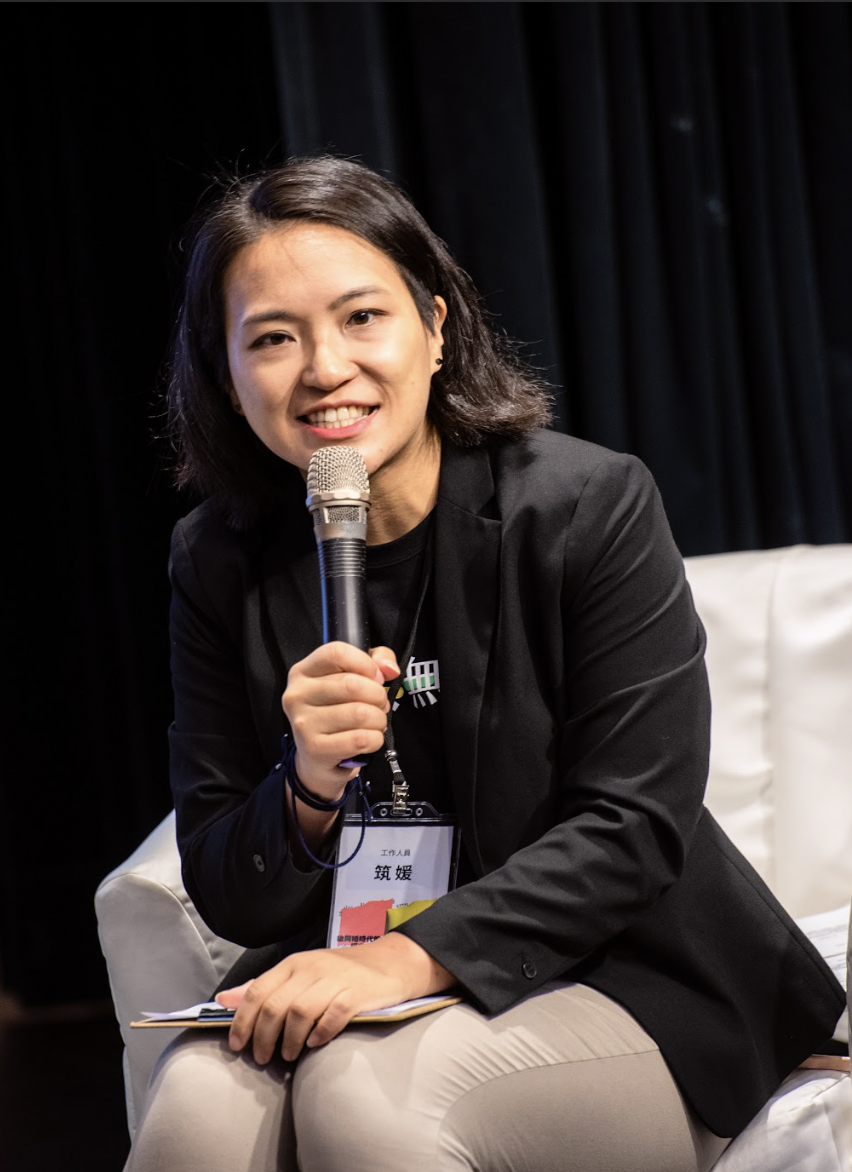
Joyce Teng is the Executive Director of Taiwan Equality Campaign (previously known as “Marriage Equality Coalition Taiwan”.) Before Taiwan Equality Campaign, she participated in some activist groups focusing on different issues like environment protection, women rights and transformational justice since 2010, and served as the Legislative assistant for the parliament of Taiwan between 2013 to 2015, and then dedicated herself to same-sex marriage legalization since 2016.

Joyce holds M.L. of National Taiwan University. With experience in the Parliament and her legal background, Joyce was responsible for the advocacy of LGBTI+ rights policies and legal reform. She advocated for inclusive political participation and representation since 2018, and acted as the Deputy Executive Director of Taiwan Equality Campaign. She then took the position as Executive Director in December 2022, leading Taiwan Equality Campaign on LGBTI+ rights advocacy.

Nyein Pyae Sone

(she/her)
Coordinator

Nyein Pyae Sone is the Finance Officer at ILGA Asia. She has been working in the international non-profit management sector since completing her first Bachelor’s degree in Accounting in 2010. With over 12 years of extensive experience, she specializes in budget management, month-end and year-end closing, partnership support for local partner organizations, grant and financial management, cash flow forecasting, and financial reporting.

Throughout her career, she has contributed to various projects within international NGOs and UN agencies in both Thailand and Myanmar. Nyein holds a Master of Business Administration (MBA) with a focus in Business Administration and Management from UCSI University, Malaysia. Her solid background in finance and deep understanding of project operations make her a valuable asset to the organizations she works with.

Yarinda Srisutat

(she/her)
Senior Events and Admin officer

Yarinda Srisutat or you can call my nickname Kim (She/Her), Based in Krung Thep Mahanakhon (Bangkok), Thailand, Yarinda is an experienced nonprofit professional with a strong background in administration, finance, and event management. She currently serves as the Senior Admin and Events Officer at ILGA Asia, where she plays a key role in ensuring seamless operations, coordinating impactful events, and strengthening regional collaboration within the LGBTQ+ movement.

Yarinda has been deeply involved with ILGA Asia over the years. From 2019 to September 2023, she worked as a Senior Finance and Admin Officer, contributing to the organization’s operational growth. After a brief tenure at APCOM Foundation from October 2023 to August 2024, she rejoined ILGA Asia in a new capacity as Senior Admin and Events Officer, bringing her expertise in logistics, planning, and community engagement.

Her journey in the nonprofit sector began in 2016 when she volunteered and worked as a field staff member at the Rainbow Sky Association of Thailand (RSAT), engaging in grassroots LGBTIQ+ advocacy. In 2017, she became a Program Assistant at the Thai Red Cross AIDS Research Centre, where she supported clinical trials focusing on transgender women as a key population.
Beyond her professional work, Yarinda studies Mahayana Buddhism and finds joy in spending time with her pet cockatiel birds.

Shambawi Paudel

(she/they)
Research Associate

Shambhawi Paudel is a feminist advocate with a research interest in critiquing intersectional application of human rights standards. She completed her LLM in Human Rights Law specializing in International Justice.She is involved in policy research and has written and published on a range of issues, including gender, queer rights, education policy, and digital rights and privacy concerns. She believes it is important to have long conversations about navigating oppressive social power relations rooted in care and community. She enjoys reading and crocheting in her free time

Omair Paul

(he/him)
Coordinator

Omair Paul is the Program Manager at ILGA Asia. He joins the team with almost a decade of UN advocacy experience, previously serving as the UN Representative for Muslims for Progressive Values (MPV) since 2014. He led the organisation’s UN advocacy strategy and campaigns, represented MPV in various high-level UN meetings & processes, and forged working relationships with diplomats, UN agencies, and civil society organisations (CSOs) and networks.

He focuses on countering fundamentalist religious ideologies and protecting the rights to free expression, freedom of religion and belief, and the economic and social rights of women, girls, and ethnic, religious, and SOGIESC minorities in Muslim societies.

Subscribe to our newsletter to recieve breaking LGBTIQ news from across Asia, opportunities and resources, and updates from ILGA Asia.

Khine Su Win

(she/her)
Coordinator

Khine Su Win is a health professional, medical doctor, researcher, trainer and human rights advocate with a profound focus on Global Health. Her career is anchored in the cause of capacity building among marginalized communities in various regions of Asia including South East Asia, South Asia and East Asia.

With a passion for social justice, she works to enable and uplift marginalized groups, including People Living with HIV (PLHIV), Women Living with HIV (WLHIV), members of the LGBTIQ community, sex workers, People Who Use Drugs (PWUD), and opium farmers. By promoting their rights and advocating for their well-being, she strives to create a more inclusive and equitable society, where every individual’s voice is heard and respected.

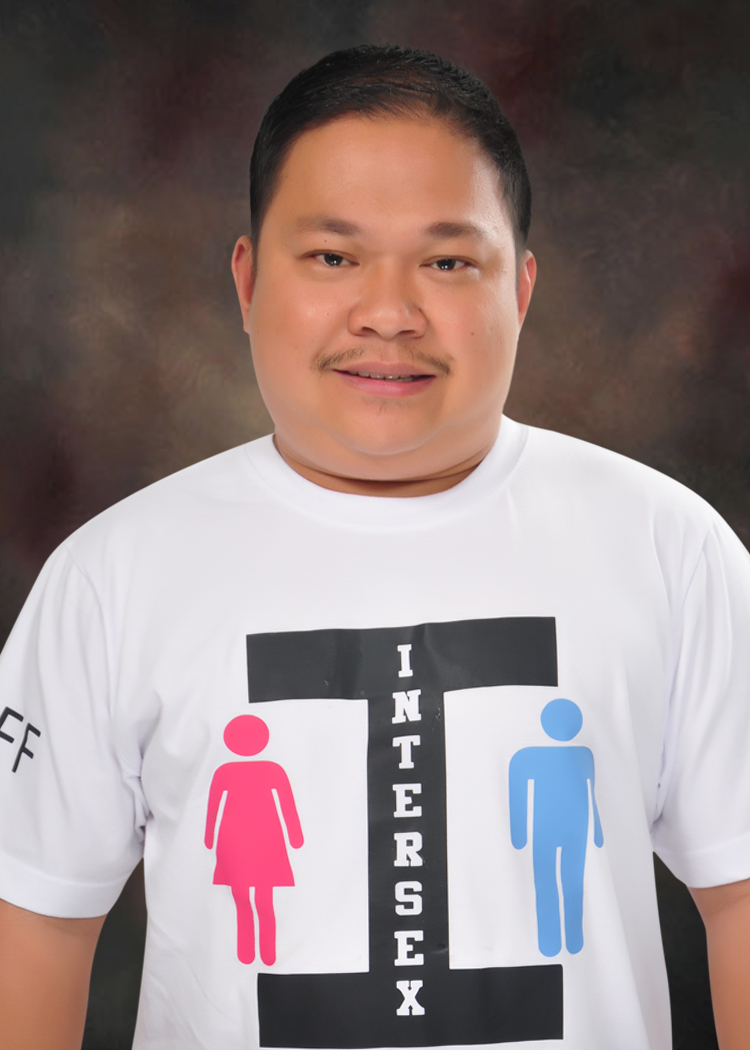
Jeff Cagandahan

(he/him)
INTERSEX REPRESENTATIVE

Jeff Cagandahan is a pioneering Filipino intersex man and human rights activist known for his landmark legal victory in 2008, when the Supreme Court of the Philippines recognized his right to change his name and gender marker, making him the first intersex person in the country to gain legal gender recognition. Born in 1981 and assigned female at birth, Jeff was diagnosed with congenital adrenal hyperplasia (CAH), a condition that led to the development of male physical traits during adolescence. His case emphasized the right to self-determination and became a cornerstone for intersex rights in the Philippines. He is the Co-founder of Intersex Philippines and a Board Member of Intersex Asia, playing key roles in advancing intersex human rights across the region. Jeff has been outspoken about the need for awareness, healthcare access, and societal inclusion for intersex people.

Phong Vuong

(he/him)
SOUTHEAST ASIA REPRESENTATIVE and ILGA Asia Co-Chair

Phong Vuong (he/him) is currently working as the LGBTI Rights Program Manager at the Institute for Studies of Society, Economy and Environment (iSEE). As one of the leading LGBTI organizations in Vietnam since 2007, iSEE has conducted original research on contemporary Vietnamese LGBTI issues, supported LGBTI civil society organizations, facilitated the LGBTI movement and implemented successful social and policy advocacy campaign.

Along with his colleagues, Phong works closely with organizations on the ground, policymakers and the public to build resilient and capable communities, create knowledge and connect stakeholders to advance LGBTI rights in Vietnam through advocacy and social campaign. Some notable achievements include the legalization of legal gender recognition for transgender people (through Article 36 of the Civil Code 2015), the subsequent drafting of the Law on Gender Affirmation (with the Ministry of Health), the I Do campaign towards Marriage Equality and the Leave with Pride campaign that pushed a MOH’s Directive condemning conversion therapy in Vietnam. Phong also led iSEE’s work with regional and international human right mechanisms, and represent iSEE in various organizations and working group, such as ASEAN SOGIE Caucus, or C4TRANS (Coalition for Transgender Rights in Vietnam).

Aside from the work with iSEE, Phong also served as Secretary of The Organizing Board of Hanoi Pride, as Secretary for NextGEN Hanoi – a local LGBTIQ organization, and is a alumni of the YSEALI Professional Fellows Program.

Sean Sih-Cheng Du

(he/him)
EAST ASIA and alternate ilga world REPRESENTATIVE

Sean Sih-Cheng Du is the Secretary-General of the Taiwan Tongzhi (LGBTQ+) Hotline Association. He joined Hotline as a volunteer in 2002 and has been since actively involved in the work on LGBTI+ and PLWHIV’s rights. He became Hotline’s Director of Policy Advocacy in 2011 and the Secretary-General in 2021.

His work includes social education, workplace equality, gay men’s sexual health, and international affairs. He was a crucial member of the Marriage Equality Coalition Taiwan and a board member of the Persons with HIV/AIDS Rights Advocacy Association of Taiwan.

He is currently the East Asian Representative of the ILGA Asia Executive Board, a board member of the Taiwan Equality Campaign, and a member of the Taipei City Committee of Gender Equality. He has a master’s degree in Sociology from National Taiwan University.

Artemis Akbary

(all pronouns)
NON-BINARY REPRESENTATIVE

Artemis Akbary is the Executive Director of the Afghanistan LGBTIQ+ Organization (ALO), a leading advocacy organization dedicated to the rights of LGBTIQ+ individuals, particularly in conflict and post-conflict settings, with a main focus on Afghanistan. Their work involves engaging with international accountability mechanisms to ensure justice and accountability for LGBTIQ victims and survivors. With extensive experience advocating for LGBTIQ+ refugees at the EU level, Artemis is a recognized voice for marginalized communities. They have also worked as a consultant with various international organizations and NGOs on forced displacement issues. Artemis has addressed global human rights issues at forums such as the UN Human Rights Council, the UN Security Council, and other international platforms. Artemis holds an academic background in International Relations and European Politics, with expertise in Queer, Peace, and Security.

Chitsanupong "Best" Nithiwana

(she/her)
SOUTHEAST ASIA and ILGA World REPRESENTATIVE

Founder and executive director of Young Pride Club, Chitsanupong “Best” Nithiwana (she/her) is a human rights defender for the rights of LGBTIQ+ youth and gender equality in Thailand. Absolutely dedicated to her career path, she started out as a public information assistant consultant at the UN headquarters. She supported the digital campaign of Youth Peace Security to gain the meaningful participation of women and youth in peace processes worldwide. In 2018, she became the first transgender participant in the US Exchange programme, YSEALI Academic Fellows.

An outspoken advocate for the LGBTIQ+ community, she now runs her own community in Chiang Mai, Thailand, Young Pride Club, which is a safe learning community for young people interested in gender equality and the LGBTIQ+ community. Established in 2018, the community provides on-the-ground activities and online content to develop leadership and participation in gender equality advocacy. Young Pride Club was also a main organizer of the Chiang Mai Pride 2019-2022 and the 2022 Youth Pride Thailand, the country’s first pride organized by LGBTIQ+ youth for LGBTIQ+ youth. In 2022, it reached over 40,000 followers and developed 50 young leaders across the country.

Recently, Best also became an APCOM Hero Award Honouree (Community Hero) under the theme “Unity & Diversity ” in recognition of her inspiring work.